Urine test strips
10 secrets behind the colour code
-
Interpret the pH correctly
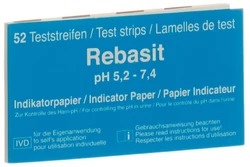
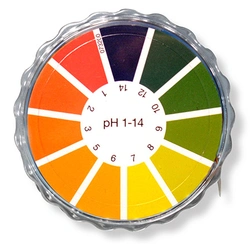
Normal urine pH is around 5–7. Values below 5 indicate overly acidic excretion, which can occur for example with high fever, gout, metabolic or respiratory acidosis, a meat-rich diet or the intake of certain medications. Values above 7 show a basic tendency and may point to an infection with urease-producing organisms (e.g. Proteus mirabilis), a strongly vegetarian diet or prolonged standing time of the sample.
-
Check the expiry date
Do not use expired test strips. They provide unreliable results and can lead to misinterpretation.
-
Store strips clean and dry
Keep test strips dry and clean. Avoid direct sunlight and high temperatures. Protect the strips from moisture and contamination. Improper storage alters reactivity.
-
Observe the dipping technique
Dip the strip only briefly and make sure that all test pads are uniformly wetted. Dipping for too long or unevenly can cause unwanted reactions.
-
Adhere exactly to the read time
Read the pads only after the waiting time specified by the manufacturer. Reading too early or too late often yields incorrect results.
-
Always use the manufacturer's colour chart
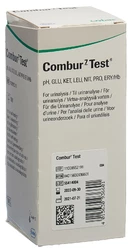
Compare colour changes exclusively with the reference chart supplied by the manufacturer, as other sources may show different shades.
-
Know the limitations of the strips
Test strips react only to certain substances and do not provide a complete diagnosis. Abnormal findings should, if necessary, be confirmed by urine culture or further laboratory tests.
-
Avoid contamination
Ensure clean sample collection and handling, as contamination can quickly distort results. Good technique increases the informative value of strip testing.
- Consider multiple parameters together
Assess the full picture: if several test pads (e.g. leukocytes, nitrite and protein) are positive at the same time, the likelihood of a true urinary tract involvement is higher compared with isolated single changes.
- Follow up abnormal findings consistently
With elevated values it is important to document the results, inform the treating physician and, if necessary, arrange further diagnostics or a urine culture. Urine test strip results provide indications that should be medically evaluated.