Ticks
This enemy of your health lurks in the grass
editorial.overview
What are ticks?
Ticks, tiny parasitic arachnids, feed on the blood of various vertebrates, including humans. They are initially only one to two millimetres in size, but after feeding they swell and become noticeably larger. The blood serves them not only as food but also for development and reproduction.
These small bloodsuckers can carry pathogens, including dangerous bacteria and viruses. When they bite, they sometimes transmit these pathogens to their host, which can lead to illnesses such as Lyme disease or tick-borne encephalitis (TBE).


Where are ticks found?
Ticks become active at temperatures of about 8°C and are particularly active in spring and autumn. Their preferred hunting times are the morning and early evening hours.
These small bloodsuckers are mainly found near paths, in tall grass, in undergrowth and in shrubs. When spending time in the forest – jogging, cycling, hiking or camping – or when playing and working in the garden, you may encounter them.
It is important to know that ticks stay at ground level and are transmitted by direct contact, not by falling or jumping from trees.
Where do ticks most often bite?
Ticks prefer thin-skinned, moist and well-perfused body areas. Therefore they are frequently found on the legs, especially in the backs of the knees, on the abdomen and chest. The neck, ears and lower back are also common sites. In children the head, neck and hairline are often affected.
How dangerous are tick bites?
A tick bite can become dangerous if the tick is infected with pathogens. In that case the pathogens pass from the tick's salivary glands or gut into the host's body via its mouthparts.
Tick bites can sometimes be life-threatening. An TBE infection (tick-borne encephalitis) can be mild, but in severe cases it may cause inflammation of the brain, the meninges or the spinal cord, which is a significant risk.
The Lyme disease bacteria are, however, the pathogens most frequently transmitted by ticks. Since Borrelia live in the tick's gut, the risk of transmission increases with the duration of feeding. Fortunately, Lyme disease is not contagious and can be treated with antibiotics.
What to do if you are bitten by a tick?
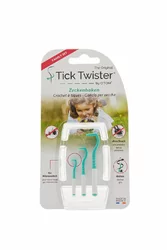
If a tick bite is noticed, the tick should be removed immediately. This can be done with a pointed tool such as a tick remover, fine tweezers or a tick card by grasping the tick close to the entry point (between head and body) and pulling slowly and straight out. Be careful not to twist the tick so that the body does not tear off and the head remain in the skin. After removing the tick, the bite site should be treated with a disinfectant to help prevent possible infection. It is best to have a tick removed by a doctor or safely and professionally at the pharmacy.
It is important that home remedies such as oil or glue are not used to remove ticks. They can cause the tick, in its last struggle, to release gut contents into the skin and possibly transmit pathogens.
When removing a tick, it should not be squeezed to prevent any fluid from the tick's gut entering the bite site. If parts of the tick remain in the skin, do not attempt to remove them yourself. Instead, see a doctor to have the remains removed professionally.
What are the symptoms of tick-borne encephalitis (TBE)?
After a tick bite, symptoms of TBE can occur. Compared with Lyme disease, TBE viruses are transmitted relatively quickly. The disease occurs in two phases. About ten days after the tick bite, for about a week nonspecific signs such as headache, fever and fatigue may appear.
After a short interval, an inflammation of the spinal cord, the meninges and the brain can occur. In about 50 percent of cases there is an isolated meningitis with severe headache and fever. In about 40 percent of cases an inflammation of the brain (meningoencephalitis) additionally occurs with disturbances of movement coordination, impaired consciousness as well as paralysis of the limbs and cranial nerves.
In about 10 percent of cases there is additionally an inflammation of the spinal cord (meningoencephalomyelitis) with flaccid paralysis, swallowing and speech disorders, paralysis of the facial and neck muscles and breathing paralysis. More than a third of those affected suffer permanent neurological damage.
However, many infections are asymptomatic or the second phase does not occur. Exact rates of disease following a tick bite are unclear, but about one third of infected people develop symptoms. Men fall ill twice as often as women and older people are more likely to have a severe course.
How does the TBE vaccine protect against a viral disease transmitted by ticks?
Since there is no causal treatment for TBE, vaccination is considered the most important preventive measure against this tick-transmitted viral disease. Vaccination is particularly recommended in TBE risk areas – regions where infected ticks are more common.
The Federal Office of Public Health (FOPH) recommends TBE vaccination for adults and children from three years of age if they live in or regularly visit a risk area. Vaccination can be carried out by a family doctor or in a vaccination pharmacy.
The risk of tick bites increases especially when hiking, jogging, camping or doing garden work – also in parks, gardens and at forest edges. In addition to wearing long clothing, thoroughly checking the body and using tick repellents, TBE vaccination is one of the most important protective measures.
How to protect yourself from ticks: practical tips
- When doing outdoor activities, wear sturdy footwear, long socks and long trousers. This covers your skin and protects you from ticks.
- Wear rubber boots over long trousers for extra protection against tick bites.
- Use insect repellents on skin and clothing to repel ticks.
- Don't forget to protect the neck and head as well.
- Stay on paths and avoid dense undergrowth and tall grass where ticks may lurk.
- Avoid sitting on the ground, especially in tick habitats such as forests.
- Give your pets a tick protection product to reduce the risk of tick bites.
- Keep grass and shrubs in your garden short to remove tick habitat.
- Choose light-coloured clothing that largely covers the body. On light fabrics ticks are easier to spot and remove.
- After every time outdoors, check yourself and your children thoroughly for ticks. Pay special attention to the head, especially the delicate skin behind the ears and at the hairline on the neck, the neck, the armpits, the groin, between the legs and the soft skin in the backs of the knees.
- Store your clothing after being in a tick area so that other household members do not come into contact with it and avoid leaving clothing in the sleeping area.
- Wash your clothes after exposure in a tick area at at least 60°C to ensure the ticks are killed.
- Keep laundry that must be stored until the next wash in a sealed plastic bag or in a separate room that is not cool and damp.
- If necessary, place the laundry in the bathtub or shower to make it easier to spot and remove any ticks present. This allows effective monitoring and control of clothing for ticks.
To minimise the risk of a tick bite, it is important to know where ticks are found and how to protect yourself properly. With the right precautions you can reduce the risk of tick bites and make your outdoor activities safer.