Sun protection for children's skin
10 summer rules that really protect delicate children's skin
-
Consistently protect babies from direct sunlight
During the first year of life your baby should never be exposed to direct sunlight, as the skin barrier is not yet fully developed. Stay preferably in the shade and use a sunshade or canopy without overheating the child. Sunscreen on babies should be avoided where possible or used only in emergencies.
-
Choose sun-opaque clothing with UV protection
Long, airy clothing, a hat with neck protection and good-quality UV sunglasses are essential. Look for UV protection factor (SPF) 30–80, especially in strong sun or for fair-skinned children. Modern UV clothing provides reliable protection — even when playing in the water.
-
Avoid the midday sun between 11:00 and 15:00
At this time up to 60% of the daily UV radiation reaches the skin. Plan outdoor activities for the morning or late afternoon and make the midday hours a shade break, indoor playtime or quiet activities.
-
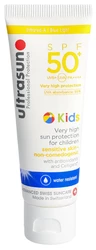
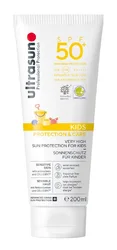
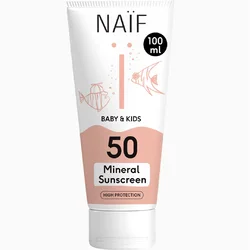
Use water-resistant sunscreens specifically for sensitive children's skin
Choose products with at least SPF 30–50, broad-spectrum protection against UVA & UVB and preferably fragrance-free. Creams or lotions are particularly gentle and do not dry out sensitive children's skin.
-
Apply enough product — generously and evenly
For children, more helps more. Don't forget areas such as ears, neck, the backs of the knees, the tops of the feet and between the toes. A sunblock stick is excellent for the nose, lips and especially sensitive spots.
-
Reapply regularly — even in the shade
Water, sweat, playing in the sand or drying off significantly reduce protection. Reapply sunscreen at least every two hours and immediately after swimming. Reapplying does not extend the maximum protection time but keeps the protection effective.
-
Watch the UV index — it determines daily protection needs
A high UV index means stronger radiation and requires more intensive protection. Check the UV index in the morning via an app or weather service to adjust your day's plan and protect in time.
-
Remember reflections from water, sand and snow
At the beach, by the pool or on snow, reflected light significantly increases the radiation dose. Here water-resistant, high-performance sunscreens, UV shirts and hats are especially important — even on cloudy days.
-
Keep an eye on your child's skin
Redness, dry patches or unusual reactions should be taken seriously. Children's skin cannot repair UV damage well yet — prevention is therefore crucial. If in doubt or in case of skin reactions, a paediatrician can provide reliable advice.
-
Teach your child a sun-care routine in a playful way
Show by your own behaviour how important protection is. Sun protection is easier to accept when it becomes a regular ritual: apply cream, put on a hat, wear sunglasses — playfully, regularly and naturally.