Eczema
10 underestimated measures that can soothe your skin
-
Gentle cleansing without irritants
Use mild, fragrance-free cleansing products to avoid further stressing the skin barrier. Hot water and aggressive surfactants can worsen eczema because they dry the skin out considerably. Lukewarm water and short cleansing times help keep the skin calm. After washing, the skin should be gently patted dry. Vigorous rubbing can further irritate already sensitive skin. A soft towel is particularly gentle.
-
Consistent re-lipidation of the skin
Apply a rich emollient immediately after showering or washing your hands while the skin is still slightly damp. This helps trap moisture and supports the skin barrier sustainably. With eczema, regular moisturising is a key factor in reducing discomfort.
-
Recognise and avoid everyday irritants
Watch out for potential triggers such as fragrances, certain textiles or cleaning agents. Many people react sensitively to synthetic fibres or alcohol-containing products. Consciously observing your skin's reactions helps identify individual triggers.
-
Cotton instead of synthetic clothing
Prefer breathable, soft fabrics like cotton. Synthetic materials can trap heat and sweat, which may increase itching. Loose clothing also reduces friction on sensitive skin areas.
-
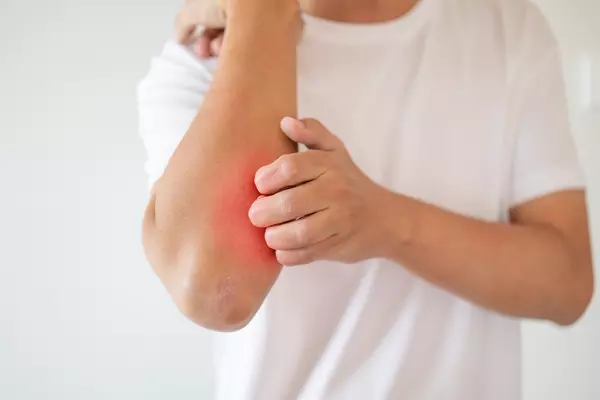
Don't worsen itching by scratching
As hard as it may be: scratching often significantly worsens eczema and can increase inflammation. Try gentle cooling or light tapping on the affected area instead. Short nails can also help prevent skin damage.
-
Strengthen the skin barrier in a targeted way
Products containing ingredients such as ceramides, panthenol or urea can support the skin's natural protective function. A stable skin barrier is crucial to better defend against irritants. Regular care can reduce the frequency of flare-ups in the long term.
-
Treat stress as a potential trigger
Stress can aggravate eczema or trigger new flare-ups. Relaxation exercises, walks or light exercise can help stabilise your inner balance. Getting enough sleep also plays an important role in skin health.
-
Avoid sudden temperature changes and optimise indoor humidity
Large swings between heat and cold put extra strain on the skin. Avoid very warm, dry rooms. A balanced indoor climate supports the skin's regeneration. Moderate humidity can help reduce feelings of tightness. Regular ventilation or the use of a humidifier can be helpful.
- Use skin-friendly detergents
Choose mild, fragrance-free detergents without aggressive additives. Residues on clothing can irritate the skin and promote eczema flare-ups. An extra rinse cycle can help remove residues more effectively.
- Respond early to skin changes
Observe your skin carefully and respond early to first signs such as redness or dryness. The sooner you act, the more a flare-up can often be mitigated. A consistent skin-care routine is particularly valuable here.