Thermometer
10 pro tips for reliable measurements
-
Normal values and daily fluctuations
The following morning body temperatures are considered healthy: 36.5 °C rectal, 36.2 °C oral and 36.0 °C axillary. Temperature varies throughout the day and reaches its maximum in the late afternoon. Take these values into account when comparing measurements.
-
Contact thermometer measurement sites
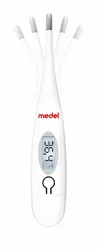
Digital contact thermometers are suitable for rectal, sublingual (under the tongue) and axillary (underarm) measurements. Choose the measurement site depending on the desired accuracy and the situation.
-
Axillary measurement: practice and limits
Clamp the thermometer under the armpit and keep the forearm close to the body. This method is convenient but is considered relatively inaccurate — use it mainly for rough checks.
-
Sublingual measurement: correct technique
Place the tip of the thermometer as far back as possible in the heat pockets to the right and left of the root of the tongue. Keep the mouth closed and do not speak. Do not move the thermometer; if necessary, hold it lightly with your hand. Clean and disinfect the device after measuring.
-
Limitations of the sublingual measurement
The sublingual method is not suitable for small children, in case of mouth injuries, a cold, or breathing problems. Refrain from very hot or cold foods and drinks for 15 minutes before measuring, as these can distort the result.
-
Rectal measurement: highest precision and procedure
For the most precise result, lie on your side, draw up your legs and relax the buttocks. Insert the tip of the thermometer with slight rotating movements no deeper than three centimetres into the anus. Clean and disinfect the thermometer afterwards.
-
Rectal measurement: precautions and contraindications
As a rule, rectal temperature is 0.3-0.4 °C higher than oral temperature. Avoid rectal measurements in case of injuries or wounds in the anal or intestinal area, and with restless people. If necessary, you can lightly grease the tip or make it slippery with warm water.
-
Tympanic thermometer: measurement principle and handling
Tympanic thermometers measure the infrared radiation from the eardrum without contact in a few seconds. The infrared radiation is captured by a lens and converted into a temperature value. The measurement is fast and usually perceived as comfortable, but it requires correct handling.
-
Forehead/infrared measurement: uses and limits
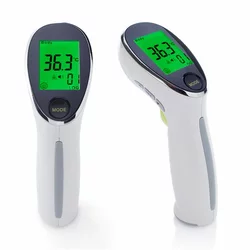
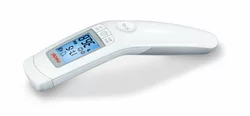
Forehead thermometers measure the skin temperature on the forehead in a few seconds, often without contact. They are hygienic and well suited for sleeping children. However, they are often among the less accurate methods and are more prone to measurement errors.
- Hygiene, cleaning and disinfection
Clean the thermometer after each measurement with dish soap and water and then disinfect it. Before use, check that no disinfectant residues remain on the device to avoid skin irritation.