Phytoestrogens
10 practical ways to incorporate plant-based sources into everyday life
-
Regularly include cruciferous vegetables
Vegetables such as broccoli, Brussels sprouts or kale provide phytoestrogens as well as valuable vitamins and minerals. Vary the preparation – for example steamed, raw or oven-roasted – to keep things interesting.
-
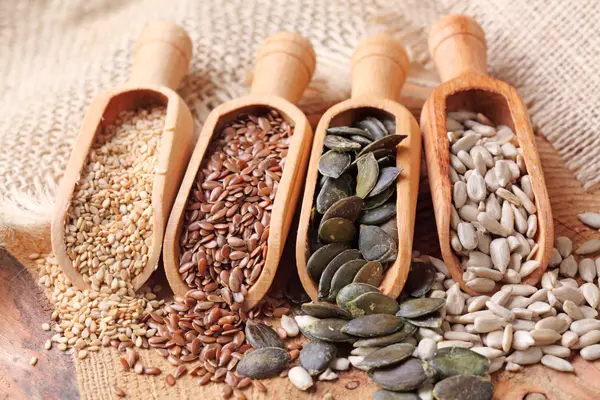
Incorporate lignan-rich seeds into daily meals
Flaxseed and sesame seeds can be sprinkled over muesli, added to smoothies or salads. This helps ensure a varied intake of phytoestrogens.
-
Add pumpkin seeds to your meals
Pumpkin seeds work well as a snack or as a topping for soups, salads and bowls. They make it easy to add extra phytoestrogens to your diet.
-
Try a variety of nuts
Although the phytoestrogen content in nuts is lower, they provide valuable fats and fibre. Almonds, walnuts or hazelnuts are easy to include in everyday meals.
-
Use dried fruits strategically
Dried apricots, dates or prunes contain phytoestrogens. Small portions make a good snack or addition to muesli. Pay attention to the natural sugar content, however.
-
Berries as a versatile addition
Strawberries, raspberries or cranberries provide many antioxidants in addition to phytoestrogens. Frozen berries are also convenient and nutrient-rich.
-
Discover hops as a source of rare phytoestrogens
Hops contain specific prenylflavonoids that are rarely found in other foods. You can enjoy hops, for example, as part of a tea or in selected beers. Alcohol-free variants also contain phytoestrogens.
-
Choose organic soy products
Soya is especially rich in isoflavones. Opt for organic quality to make a conscious and sustainable food choice.
-
Vary the preparations of herbs
Red clover, rhapontic rhubarb or sage can be used, for example, as tea, tincture or extract. This allows them to be flexibly incorporated into different daily routines.
- Consider seasonal availability
Use fruits and vegetables like berries or crucifers preferably fresh. Frozen products are also a good alternative. This way you get valuable nutrients even outside the season.