Hashimoto's thyroiditis
10 keys for hormonal balance
- \n
- \n
Prefer anti-inflammatory fatty acids
\n \n
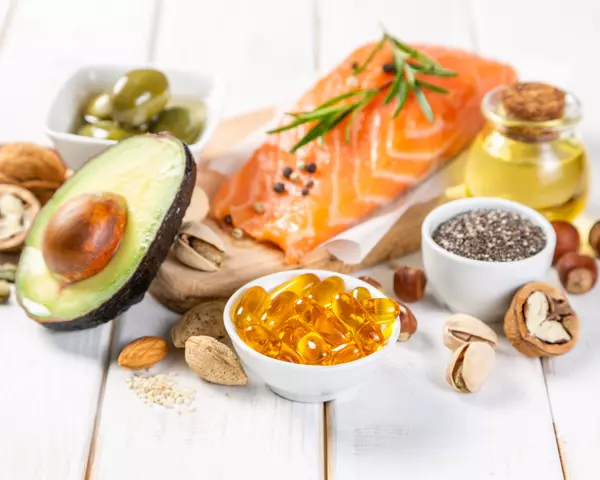
Incorporate foods with healthy fats into your diet, for example fatty fish (salmon), nuts and seeds, and olive or rapeseed oil. These fatty acids can help reduce inflammatory activity and are easy to include in meals, for example salmon for dinner or walnuts in your muesli.
\n- \n
- \n
Include omega-3 sources regularly
\n \n
Deliberately add omega-3 rich foods such as fatty fish, walnuts, flaxseeds or hemp seeds to your meal plan. Omega-3 has anti-inflammatory effects and is simple to implement. A spoonful of flaxseeds in yogurt or a handful of walnuts as a snack is often enough.
\n- \n
- \n
Limit sugar and refined carbohydrates
\n \n
Limit consumption of sugar and white flour products such as white bread or conventional pastries, as these can promote blood sugar fluctuations and inflammatory responses. Instead choose wholegrain products or fresh, minimally processed foods.
\n- \n
- \n
Avoid trans fats and processed convenience foods
\n \n
Avoid hydrogenated vegetable oils and trans fats found in many convenience foods, crisps or certain baked goods. These fats are associated with increased chronic inflammation and should be removed from your diet where possible.
\n- \n
- \n
Fibre for gut health and inflammation control
\n \n
Focus on fibre-rich foods such as oats, legumes, flaxseeds or psyllium. They promote the formation of short-chain fatty acids like butyrate in the gut, which can have positive effects on the gut environment and inflammatory processes.
\n- \n
- \n
Use antioxidant vitamins daily
\n \n
Ensure regular intake of antioxidant vitamins: vitamin C from peppers, Brussels sprouts or citrus fruits, vitamin E from nuts or seeds, and beta-carotene from carrots, pumpkin or tomatoes. These nutrients help reduce oxidative stress.
\n- \n
- \n
Make targeted use of plant compounds
\n \n
Use the effects of plant compounds such as flavonoids from berries and apples, glucosinolates from cabbage and radishes, and curcumin from turmeric. Note that curcumin is better absorbed when combined with black pepper.
\n- \n
- \n
Limit fatty meat products
\n \n
Reduce intake of fatty meats, processed cold cuts or very fatty egg preparations, as their fatty acids can promote inflammatory processes. Instead choose lean cuts of meat or plant-based protein sources.
\n- \n
- \n
Dietary tips for concurrent gastritis and lifestyle
\n \n
With concurrent autoimmune gastritis, avoid very spicy, heavily seasoned or very fatty dishes, coffee and smoked products. A glass of lemon water before meals can support digestion. Also avoid alcohol and tobacco, as these can promote inflammation.
\n- \n
- Have a medical neck examination performed \n
Have the neck palpated so that doctors can assess the size, tenderness and presence of nodules on the thyroid. This clinical examination is often the first and important step for further evaluation.