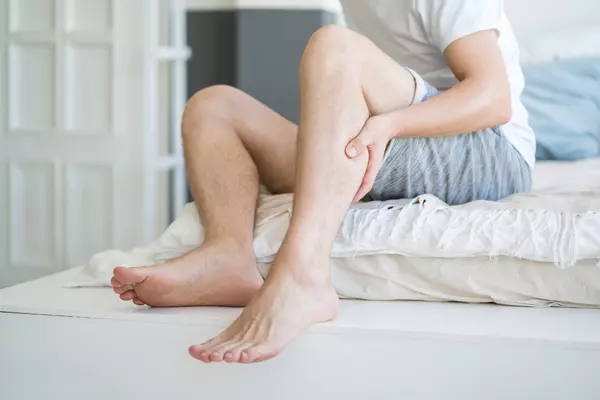
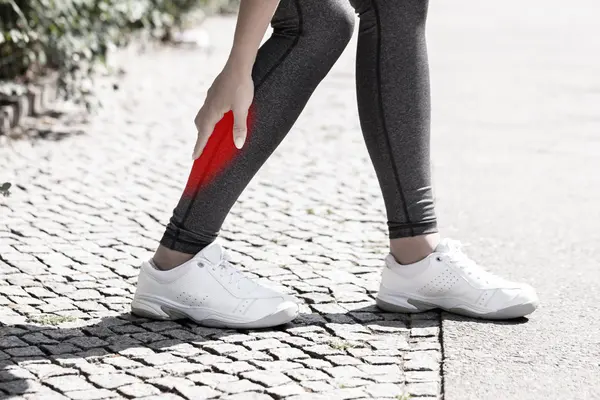
Calf cramps
10 quick measures for sudden cramps
- \n
- \n
Choose well-fitting, comfortable shoes
\n \n
Shoes that are too tight or that force the foot into an unnatural position can strain the muscles in the foot and calf. If the foot stays in an unfavourable position for many hours, this improper loading can affect the calf.
\n- \n
- \n
Keep moving regularly in everyday life
\n \n
If the legs remain still for long periods – for example during prolonged sitting – the muscles can lose mobility and become tighter. Walks, cycling or swimming can help to activate the muscles regularly and keep them flexible.
\n- \n
- \n
Include targeted calf-stretching exercises
\n \n
Regular stretching exercises can help maintain the flexibility of the calf muscles. It is particularly useful to consciously stretch the lower legs several times a week, for example after exercise or in the evening.
\n- \n
- \n
Stretch the calf immediately during an acute cramp
\n \n
If a cramp occurs suddenly, a quick stretch can help reduce the tension. Gently pull the toes towards the knee while pressing the heel down at the same time.
\n- \n
- \n
Stay calm if a cramp happens in the water
\n \n
If a calf cramp occurs while swimming, it is important to remain calm and swim in a controlled way to the shore. Try to gently extend the foot. In some cases, a gentle stretch in the water can help reduce muscle tension.
\n- \n
- \n
Use heat or cold depending on the situation
\n \n
Heat is often perceived as soothing when muscles are tense. A short warm shower for the feet or calves can help relax the muscles. Some people also find cooling compresses pleasant.
\n- \n
- \n
Pay attention to a relaxed foot position in bed
\n \n
Even during sleep, the position of the feet can affect the calf muscles. If the foot is persistently pointed strongly downwards, this can lead to increased tension. Make sure that the duvet or mattress does not press your foot into an unfavourable position.
\n- \n
- \n
Complement your diet with mineral-rich foods
\n \n
A varied diet provides the body with different minerals. Foods such as green leafy vegetables, wholegrain products, legumes, seeds or fish contain, among other things, magnesium and other minerals that can contribute to a balanced diet.
\n- \n
- \n
Support mobility with fascial (myofascial) exercises
\n \n
Fascial exercises or a massage with a foam roller can help loosen tense tissue structures. The gentle pressure on the muscles can promote tissue mobility.
\n- \n
- Have frequent or unusual cramps checked by a doctor \n
If calf cramps occur very frequently, disturb sleep or are accompanied by symptoms such as tingling, numbness or movement restrictions, a medical assessment may be advisable.