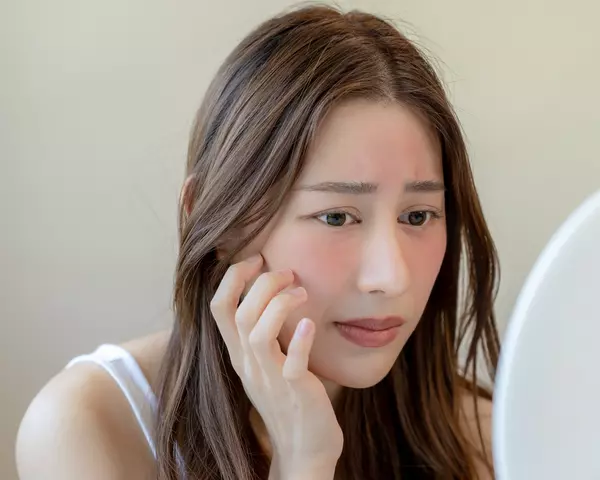
Ruby spots
10 tips for safely and effectively treating small red skin dots
- \n
- \n
Always have new skin changes assessed by a professional
\n \n
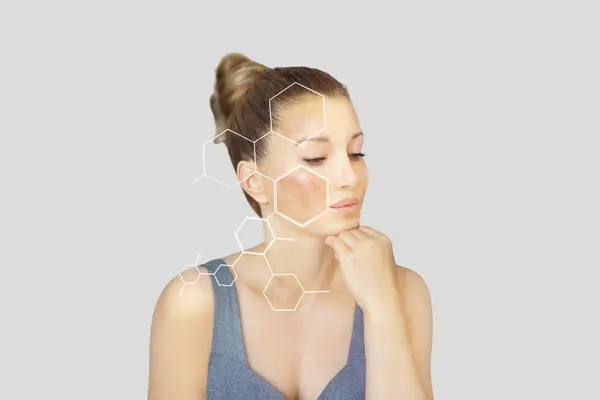
Ruby spots are usually harmless, but their red dots can easily be mistaken for other skin changes. A quick check with a dermatologist provides clarity and reassurance.
\n- \n
- \n
Never reach for tweezers or a needle yourself
\n \n
Even if a spot bothers you: removing it on your own can cause heavy bleeding, infections or unattractive scarring. Medical procedures such as laser or electrocoagulation are safer and considerably more effective.
\n- \n
- \n
Keep an eye on ruby spots
\n \n
If a spot suddenly grows, changes colour or starts to bleed, seek medical advice. Such changes are rare but important for the safe management of skin lesions.
\n- \n
- \n
Use sunscreen consistently after dermatological procedures
\n \n
After laser or electrocoagulation the skin is particularly light‑sensitive. An SPF 50 sunscreen protects against pigment shifts and supports a smooth, even healing process.
\n- \n
- \n
Gently conceal bothersome spots with suitable products
\n \n
If you want to visually hide ruby spots, tinted day creams, camouflage make‑up or concealer can help. Products with SPF have the added benefit of protecting against UV rays at the same time.
\n- \n
- \n
Avoid home remedies without proven effect
\n \n
Apple cider vinegar, honey or castor oil have no medical effect on ruby spots and can even irritate the skin. Prefer tested, skin‑friendly dermocosmetics from the pharmacy.
\n- \n
- \n
Pay attention to your vascular health
\n \n
High blood lipid levels are associated with a greater tendency to develop ruby spots. A balanced diet, exercise and possibly omega‑3 supplements can be supportive.
\n- \n
- \n
Choose the right timing for cosmetic treatments
\n \n
Autumn and winter are ideal for laser or cold treatments because UV exposure is lower. This minimises the risk of pigment changes and promotes optimal healing results.
\n- \n
- \n
Care for sensitive skin areas with targeted products
\n \n
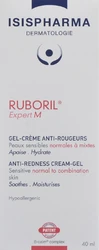
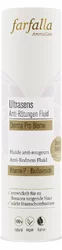
Ruby spots occur more often on dry or mature skin. Moisturising creams, reparative balms or products with panthenol strengthen the skin barrier and improve the overall appearance of the skin.
\n- \n
- \n
Think carefully about whether removal is really necessary
\n \n
Ruby spots are part of natural ageing. Not every spot has to disappear – sometimes acceptance is the healthiest choice. If you still want treatment, dermatology teams will be happy to advise you on safe and suitable options.